
 This is a thought-provoking article on human encounters with giant UFO occupants in Spain and Latin America. It includes of several recent and older incidents some of which involve the effects of UFOs on motor vehicles.
Virtual Viewing is Now Live
 The Virtual Viewing class has reopened for new applicants. Enhance your intuition, right-brain vision, and overall creativity with this challenging and unique online course. The whole training system is just $197 until Midnight on Friday, March 19th. Learn more here.
Toyota, Chaos Theory, and Crop Circles
 For the last century or so, technology has been a great driving force behind much global economic growth. Businesses have seen technology as a pathway to success and profits. The recent unexplained behavior of some Toyota cars with electronic throttle controls calls this belief into question. While many of us see technology as something that brings predictability and comfort into our lives and have a great deal of faith in it, there is also another side to technology: that of unexpected consequences and uncertainty.
The sociologist Charles Perrow pointed out several decades ago that “tightly-coupled” systems were prone to unanticipated failures as the result of the close proximity of many sensitive and interactive parts. Examples include Chernobyl, Three-Mile Island, and the Space Shuttle Challenger disasters. Then, in the ’80s and ’90s, chaos theory and fractal geometry showed us that highly complex systems are likely to experience unintended consequences as a result of the non-linear interactions that erupt in many types of “non-equilibrium” systems (i.e., weather, living things). In certainly could be argued that modern automobiles, while not quite living things, are also tightly-coupled systems that are sometimes subject to non-linear behavior.
The incidents of Toyota cars with unintended acceleration events seem to confirm both chaos theory and Perrow’s ideas. Mainly, that as systems get more complex, new unexpected interactions are likely to occur. GM engineers originally snubbed the idea of making their own hybrid vehicle on account of the many extra thousands of parts and miles of wire needed beyond that of a conventional car. They just thought it was too complicated and instead aimed for a fuel-cell car (which is still in the design stage, by the way).
No one now seems to know exactly what is causing these acceleration issues and Toyota claims that the software is fine. And that is precisely the point. As electronic systems are created in ever new and complex ways, unintended consequences are increasingly likely to happen. One is reminded of the crash of several U.S. Army Blackhawk helicopters in Germany in the 1990s that were allegedly caused by them getting too close to radio towers. And the Airbus plane has had its share of automated mishaps; crashes that some suspect could have been avoided if the plane were not run by computerized “fly by wire” systems which can sometimes override pilots own flight control. New Scientist magazine recently suggested that the Toyota incidents were a product of electrical interference from the likes of cell phones and similar devices.
Whatever the cause turns out to be, it reminds me of the strange phenomena witnessed in the presence of UFOs and crop circles. In the 1970s, Ford motor company even issued a bulletin on the effects of UFOs on cars including failed electrical systems and stalled engines. And I’ve seen a lot of weird electronic events in crop circles in the last few decades including shorted-out cameras and batteries. Even the National Geographic film crew, with which we worked in the summer of 2009, said their professional video camera completely and inexplicably failed while visiting a crop formation that season–it froze up so severely they had to call their London office for instructions how to reboot it. One wonders whether the Toyota experience is similarly related in the sense that new, advanced technologies may engage previously unexplored electronic phenomenon including such possibilities as room-temperature superconductivity or other similarly mysterious quantum effects.
One of the German sociologist Max Weber’s favorite themes was the “irrationality of rationality.” By that, he meant how the very efficiency of modern organizations could make them so cold and depersonalized that they no longer served a human purpose and so had become irrational. However, the same concept can be applied to modern technology: mainly that systems can become so complex, tightly integrated, and precisely controlled that bring forth new quantum or nonlinear properties that previously had no impact or relevance to our level of existence. So in a sense, our efforts to control technology nature necessarily and paradoxically brings forth “Black Swan” events.
New Link Found Between Liquid Crystals and Superconductors: Crop Circle Connection?
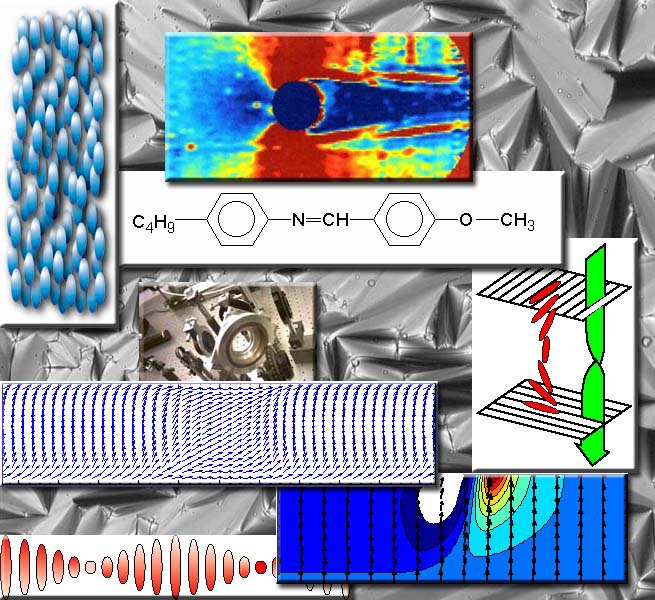 I’ve always suspected a link between crop circle anomalies and room-temperature superconductivity. And I’ve argued many times that crop circles may behave like liquid crystals, such as those in your mobile phone or computer flat screen display. New research brings these theoretical connections a bit closer. An article in New Scientist, (January 16, 2010–“Liquid crystal link to superconductor mystery), explains how “electronic liquid crystals” may, in fact, be behind the mystery of high-temperature superconductivity: a heretofore unexplained phenomenon where electrons pair up and electrical resistance in a room-temperature material drops to near zero. In other words, the material spontaneously conducts electricity much more efficiently, a process that usually only happens at extreme cold temperatures.
Researchers used a special type of tunneling microscope to actually see the electrons in an iron-based superconductor. When they did, the researchers observed electrons as “faint striped patterns created by quantum effects” that cause the electrons to line up in a particular direction. To me this seems very analogous to the swirled, directional patterns of wheat or other grain materials in a crop formation that makes them look just like layered liquid crystals. Could they actually be liquid crystals?
The Nobel laureate Brian Josephson, one of the pioneers in superconductivity, suggested controversially that it may be related to remote viewing and other related phenomena. To me, this recent research, brings us one step closer to understanding how the directional, swirled patterns of crop circle lay is related to the weird battery draining and camera destroying effects that are consistently reported from time to time by visitors, including the author, to crop circles.
“A Whole New Mind: Why Right-Brainers Will Rule the Future”–Read this now
 I’ve started reading Daniel H. Pink’s A Whole New Mind: Why Right-Brainers Will Rule the Future. This work was summarized a few years ago by Wired Magazine in its article “Revenge of the Right-Brain.” If you are interested in many of the topics posted on this blog, you will definitely enjoy this book. Pink shows why right-brain thinking is so valuable and why it is needed more than ever in our declining and troubled economy. We learn how the right-brain differs from it’s left-brain sibling and why it’s unique abilities tend to be less utilized and under-appreciated by modern industrial societies. Here’s my brief YouTube Review of the book.
“Artificial Leaves” Generate Energy
 This is pretty cool. New techniques have been developed to transmute leaves’ natural chlorophyll into titanium which is then used to generate hydrogen. While the chemical transformation is important in the process, it is the leaves’ natural complex nanostructures which are so efficient in catching light and generating energy. In fact, the leaves do this much better than a commercially available titanium product called P25. (New Scientist, January 9th, 2010)
Remote Viewing Classes and Training
This site contains information about live and online remote viewing training, instruction, and classes:
Nature’s Quantum Field is Fractal
Startling new research reported in Science Magazine suggests that the quantum field of the universe has a fractal distribution. Fractals are objects that appear increasingly detailed the closer you look like galaxies, mountains, rivers, and the human cardiovascular system, for example. Measurements of a commonly found semiconductor show that electron waves, under certain circumstance, in this case near the metal-insulator boundary, appear as fractals. It was previously thought that the waves would localize in a uniform, regular way. This new research shows that waves are fractally distributed according to a power-law.
The significance of this finding is that supports the idea that many different types of systems, at various scales, are capable of self-organization. This is because systems with fractal distributions often possess chaotic dynamics which in turn support self-generating evolutionary-processes. As discussed in Opening Minds, and elsewhere on this blog, it is highly likely that chaotic, self-organized processes are found in remote viewing phenomena and also the unexplained effects of crop circles.
Orb Follows Plane
This looks exactly like orbs seen in and around crop circles! First it appears out of nowhere and then flies off just like in many videos of orbs interacting with crop circles.
Amazing! Green Plants Are Quantum Computers
 Brand new research from several universities reveals that green plants use quantum computation to convert light into chemical fuel. An article from New Scientist (February 6th, 2010) shows that plants make use of a principle known as “quantum coherence” to convert light into useable energy. Tiny light-gathering structures known as antennas gathering photons and transfer them to the fuel generating part of the cell. However, the new discovery shows the plants’ green chlorophyll allows the photons to take the form of an excited wave-like “superposition” before being converted into usable energy. Plants absorb many different frequencies of light and use this type of computation to calculate how to extract the most energy from the light. The eight pigment molecules that are part of each chlorophyll structure allow the photons to reach this superposition for a tiny fraction of a second (400 femtoseconds). The superposition then collapses and the photon then follows the path of least resistance creating the most efficient energy production.
It was previously believed that quantum coherence could only be achieved at ultra-cold temperatures and these new experiments show that quantum effects can occur at room temperature. This is a very significant discovery in that it shows the relevance of quantum principles to macroscopic organisms that we can perceive at a human scale. One idea is to use the same quantum mechanisms to dramatically improve the efficiency of solar cells.
This discovery allows makes wonder if these principles are in some way related to the weird energy effects we see in and around crop circles. After all, many crop formations have a macroscopic, shape-based coherency which might be energetically interacting with grain crops in some previously unexplainable way, perhaps with the above principles. It’s food for thought and grist for the mill of planetary intelligence.