Investigation into Dark Energy as the Cause of Anomalous Electromagnetic Activity Observed in the Vicinity of Crop Formations

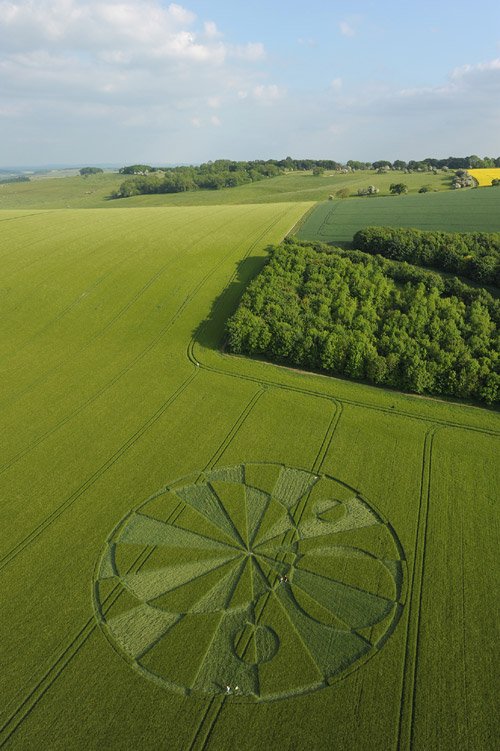
I saw three separate devices fail within 10 minutes, at the edge and inside of this crop circle, Fyfield Down 1999.
The author witnessed three separate electronic devices fail within 10 minutes, at the edge and inside, of this crop circle at Fyfield Down 1999.

Crop circles and formations have long been associated with electronic anomalies in cameras, batteries, and other electronic equipment. Upon entering or being in the vicinity of a formation, visitors sometimes report their cameras and compasses malfunctioning, batteries rapidly draining, temporal anomalies, and even unexplained aerial luminosities. Other formations seem to have unexplained magnetic effects on compasses and magnetometers. We estimate that roughly 5 percent of all crop formation visits have these effects, regardless of whether the crop circles are man made or not. The author saw this effect first-hand in 1999, in a man made circle in the U.K., when three electronic devices stopped working within a few minutes. The cause of this perplexing phenomena has been unknown. We suggest that some crop circles are interacting with a cosmic scalar “quintessence” field known as dark energy, the so-called fifth force, producing subtle alterations to Maxwell’s formulas. This would cause the static field of the crop formation to create very weak electrical currents. Dark energy is thought to make up around 68 percent of the total mass-energy of the universe and have a strength, on average, of about one joule per square kilometer. The aforementioned electromagnetic anomalies could be caused by crop formations’ crystalline-like lattice structures interaction with a quintessence field. In this way, we could also describe electrically active crop circles as Dark Energy Circuits (DECs) or attractors.

References

http://arxiv.org/abs/1302.1579

http://www.newscientist.com/article/…ry.html


Abrahms, Nancy Ellen and Joel R. Primack. 2012. The New Universe and the Human Future: How A Shared Cosmology Could Transform the World. Yale University Press.
(This is a wonderful book about dark matter and dark energy. The e-book versions have
some great links to amazing looking videos of how our universe evolved.)

Hein, Simeon. 2007. Presentation at Society for Scientific Explanation in East Lansing, Michigan. June 2nd. “Anomalous Energies and Balls of Light in Crop Circles: Photonic Refraction, Spontaneous Crystallinity, and Quasi-Particles.”

Hein, Simeon. “Electromagnetic and Crystalline Properties of Crop Circles.” The Circular. Spring 2002, Issue 45.

Videos and other evidence, links below

http://youtu.be/ShyMxsJaK3s (camera failure)

http://youtu.be/K02RTaqFCiQ (GPS battery failure)

http://youtu.be/cRqbC5lNSO0 (camera failure)

http://youtu.be/rbpQSGqFkkw (electronic compass malfunction)

http://youtu.be/HNxifJwxB6E (camera malfunction)

www.mountbaldy.com/crop/index…iltonHillFarms (anomalous magnetic fields
detected by Colin Andrews)

More info at www.CropCircleScience.com

Simeon Hein, Ph. D.
Institute for Resonance,
1942 Broadway, Suite 314
Boulder, CO 80302
415-413-8052
InstituteforResonance.org

New Crop Circle Interview–Secrets Revealed!

httpv://www.youtube.com/watch?v=RRPlQ6t-iTY

Another Camera Failure in a Crop Circle–East Kennett, July 2011

We sometimes see this type of unexplained electronic equipment failure as we visit the U.K. crop circles with our tour group. The camera affected this time is a new Canon Rebel EOs T2i in the East Kennett formation. It lost it’s ability to focus as the person stepped into the formation, then it completely lost power for a few minutes.  A few hours later it had completely recovered. (My camera video recorder also failed briefly as I attempted to record this anomalous event.)

New Crop Circle Stunner

Courtesy of Olivier Morrel

Here’s the latest U.K. crop circle at Liddington Castle, Wiltshire. This particular formation has a “lens-type” effect. What is it and what does it mean?

See more pictures here.

Second U.K. Crop Formation of the Year

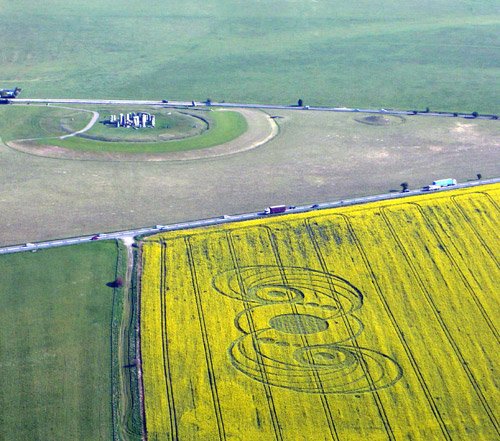
If you haven’t seen it, this is the second known formation in the U.K. this year. It appeared near Stonehenge around May 9th and it’s a whopper!  Read more about the Stonehenge Formation here.
(Photos © 2010 by Chris Bird.)

First U.K. Crop Circle of the Year

The first U.K. crop circle of the year has appeared, the so-called “Badger Formation,” on May 5th, by Old Sarum. (Discovered by Badger of Disclose TV.) See it here.

Toyota, Chaos Theory, and Crop Circles

For the last century or so, technology has been a great driving force behind much global economic growth. Businesses have seen technology as a pathway to success and profits. The recent unexplained behavior of some Toyota cars with electronic throttle controls calls this belief into question. While many of us see technology as something that brings predictability and comfort into our lives and have a great deal of faith in it, there is also another side to technology: that of unexpected consequences and uncertainty.

The sociologist Charles Perrow pointed out several decades ago that “tightly-coupled” systems were prone to unanticipated failures as the result of the close proximity of many sensitive and interactive parts. Examples include Chernobyl, Three-Mile Island, and the Space Shuttle Challenger disasters. Then, in the ’80s and ’90s, chaos theory and fractal geometry showed us that highly complex systems are likely to experience unintended consequences as a result of the non-linear interactions that erupt in many types of “non-equilibrium” systems (i.e., weather, living things). In certainly could be argued that modern automobiles, while not quite living things, are also tightly-coupled systems that are sometimes subject to non-linear behavior.

The incidents of Toyota cars with unintended acceleration events seem to confirm both chaos theory and Perrow’s ideas. Mainly, that as systems get more complex, new unexpected interactions are likely to occur. GM engineers originally snubbed the idea of making their own hybrid vehicle on account of the many extra thousands of parts and miles of wire needed beyond that of a conventional car. They just thought it was too complicated and instead aimed for a fuel-cell car (which is still in the design stage, by the way).

No one now seems to know exactly what is causing these acceleration issues and Toyota claims that the software is fine. And that is precisely the point. As electronic systems are created in ever new and complex ways, unintended consequences are increasingly likely to happen. One is reminded of the crash of several U.S. Army Blackhawk helicopters in Germany in the 1990s that were allegedly caused by them getting too close to radio towers. And the Airbus plane has had its share of automated mishaps; crashes that some suspect could have been avoided if the plane were not run by computerized “fly by wire” systems which can sometimes override pilots own flight control. New Scientist magazine recently suggested that the Toyota incidents were a product of electrical interference from the likes of cell phones and similar devices.

Whatever the cause turns out to be, it reminds me of the strange phenomena witnessed in the presence of UFOs and crop circles. In the 1970s, Ford motor company even issued a bulletin on the effects of UFOs on cars including failed electrical systems and stalled engines. And I’ve seen a lot of weird electronic events in crop circles in the last few decades including shorted-out cameras and batteries. Even the National Geographic film crew, with which we worked in the summer of 2009, said their professional video camera completely and inexplicably failed while visiting a crop formation that season–it froze up so severely they had to call their London office for instructions how to reboot it. One wonders whether the Toyota experience is similarly related in the sense that new, advanced technologies may engage previously unexplored electronic phenomenon including such possibilities as room-temperature superconductivity or other similarly mysterious quantum effects.

One of the German sociologist Max Weber’s favorite themes was the “irrationality of rationality.” By that, he meant how the very efficiency of modern organizations could make them so cold and depersonalized that they no longer served a human purpose and so had become irrational. However, the same concept can be applied to modern technology: mainly that systems can become so complex, tightly integrated, and precisely controlled that bring forth new quantum or nonlinear properties that previously had no impact or relevance to our level of existence.  So in a sense, our efforts to control technology nature necessarily and paradoxically brings forth “Black Swan” events.

New Link Found Between Liquid Crystals and Superconductors: Crop Circle Connection?

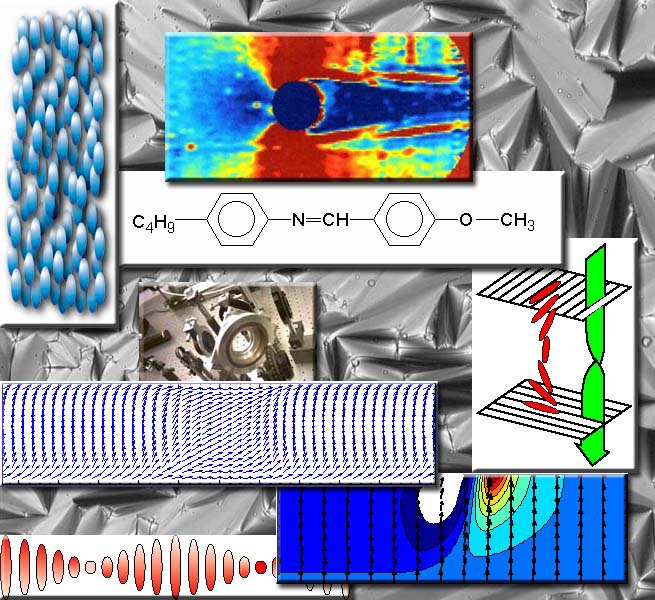
I’ve always suspected a link between crop circle anomalies and room-temperature superconductivity. And I’ve argued many times that crop circles may behave like liquid crystals, such as those in your mobile phone or computer flat screen display. New research brings these theoretical connections a bit closer. An article in New Scientist, (January 16, 2010–“Liquid crystal link to superconductor mystery), explains how “electronic liquid crystals” may, in fact, be behind the mystery of high-temperature superconductivity: a heretofore unexplained phenomenon where electrons pair up and electrical resistance in a room-temperature material drops to near zero. In other words, the material spontaneously conducts electricity much more efficiently, a process that usually only happens at extreme cold temperatures.
Researchers used a special type of tunneling microscope to actually see the electrons in an iron-based superconductor. When they did, the researchers observed electrons as “faint striped patterns created by quantum effects” that cause the electrons to line up in a particular direction. To me this seems very analogous to the swirled, directional patterns of wheat or other grain materials in a crop formation that makes them look just like layered liquid crystals. Could they actually be liquid crystals?
The Nobel laureate Brian Josephson, one of the pioneers in superconductivity, suggested controversially that it may be related to remote viewing and other related phenomena. To me, this recent research, brings us one step closer to understanding how the directional, swirled patterns of crop circle lay is related to the weird battery draining and camera destroying effects that are consistently reported from time to time by visitors, including the author, to crop circles.